Data centres live and die by their uptime, yet the roof over the servers is often the last thing on anyone's mind – until it leaks!
While the focus in data centre construction is largely on high-tech server stacks and sophisticated cooling systems, roofs are key to preventing water leaks, maintaining thermal performance, and delivering significant savings. As this feature explains, one of the ways to future-proof or restore your roof, save money and protect the mission-critical equipment inside is a silicone roof coating.
The Cost of Cooling
Cooling can be one of the highest operating costs for data centres, often accounting for 40% or more of total energy consumption, depending on the facility’s age. Any material that effectively reduces the facility's thermal load is a direct investment in the bottom line. By reducing cooling energy use, silicone roof coatings may lower the Power Usage Effectiveness (PUE).
A roof’s ability to reflect solar energy, known as its Solar Reflectance Index (SRI), is a crucial part of managing the building’s heat gain. This is where the choice of roof coating is hugely important. White, highly reflective coatings provide solar reflectance and thermal emissivity.
By reflecting a significant portion of solar radiation rather than absorbing it as a dark roof does, a high-quality reflective, white silicone coating can lower the roof's temperature. This directly reduces heat transfer into the facility, cutting HVAC demand and saving an estimated 10% to 50% on cooling costs, depending on the environment. Overall, this reduction can yield an annual saving of 7% to 15% in cooling costs.
The reduced thermal load isn’t just saving money on energy costs; it can also extend the life of the cooling equipment. By reducing stress and operational hours on chillers, fans and compressors, the coating effectively defers significant CapEx costs associated with replacing or overhauling these expensive HVAC components.
Building Envelope Integrity
Naturally, a data centre's roof is the first line of defence against environmental hazards, with water leaks being a large risk. A roof failure leading to leaks can cause catastrophic damage to mission-critical equipment, resulting in potentially unrecoverable downtime and data loss – unthinkable in the data centre world!
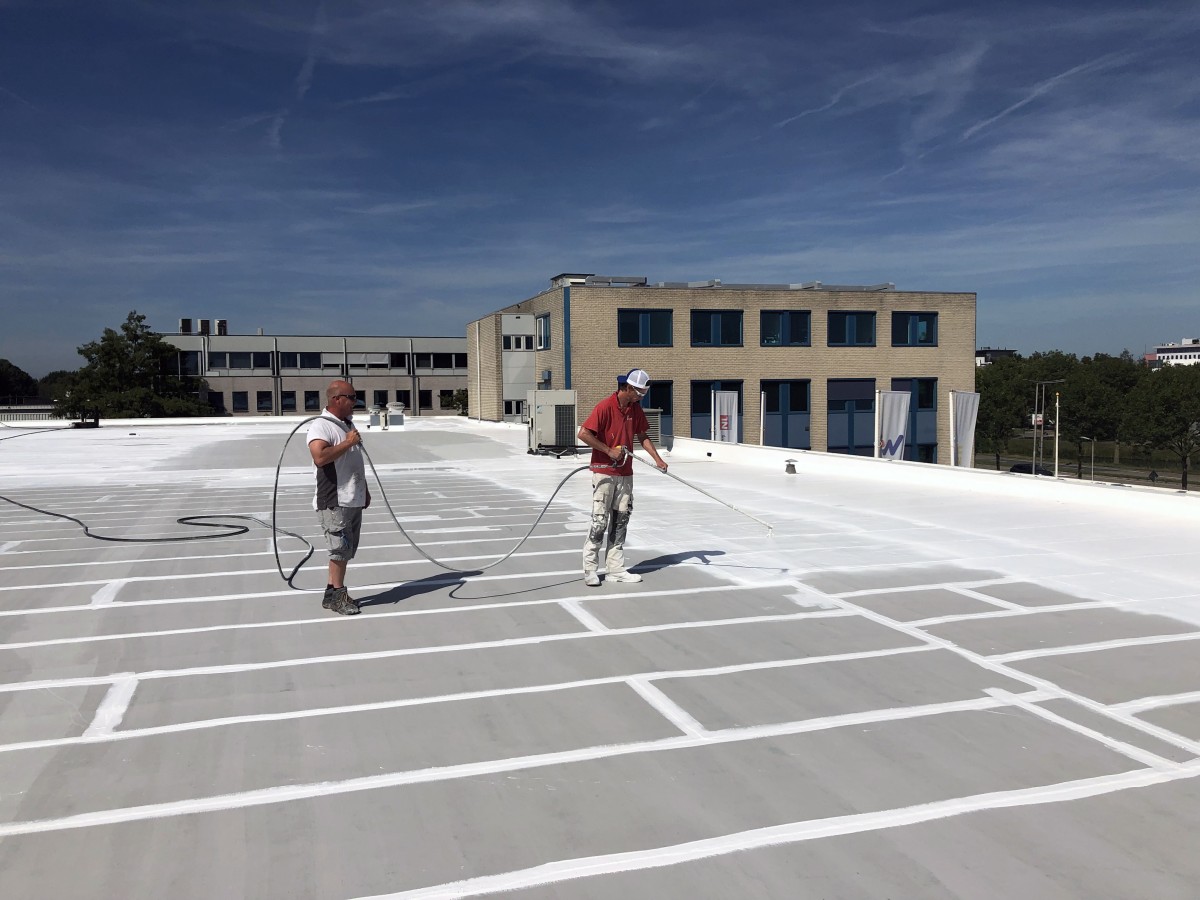
The right silicone coating can provide effective long-term protection against this. Liquid-applied silicone creates a seamless membrane over the entire roof surface. Many data centre roofs have sheet-applied membranes and metal substrates with vulnerable seam joints, whereas a seamless silicone coating provides a robust, durable barrier against water ingress.
In many locations, data centre roofs are exposed to constant and intense UV radiation, which is a leading cause of premature failure in many organic roofing materials (like single-ply or modified bitumen). Silicone is an inorganic material with a chemical structure that is inherently resistant to UV degradation. This stability ensures that the coating maintains its structural integrity, providing a long-term, reliable asset protection strategy.
Construction Efficiency and Sustainability
The process of restoring or replacing a data centre roof can be highly disruptive and costly. Apart from the inevitable downtime, there is an inherent risk of dust and debris, and of exposing the highly sensitive equipment below.
Whether you are breaking ground on a new build or maintaining an existing facility, silicone roof coatings add an essential layer of protection. Applying a silicone coating during construction provides a seamless, waterproof barrier from day one, reinforcing the roof’s integrity and ensuring the building envelope is watertight from the outset.
Silicone is compatible with almost any roof type (like metal, single-ply, or bitumen). This means you can restore your roof without the mess, the cost, or the significant risk of a complete tear-off. The coating can often be applied directly over the existing substrate with minimal preparation, saving time and money and, crucially, preserving uptime.
As data centres adopt on-site solar arrays, a critical design challenge emerges: the roof should last as long as the panels. With solar arrays typically lasting 25 years or more, they often outlast conventional roofing systems. A high-performance silicone roof coating provides a seamless layer with the elasticity needed to withstand the thermal stress of solar racking, ensuring the roof's lifespan better matches the solar panels'.
Lower energy consumption directly impacts the building’s PUE. This reduction in cooling demand is key to achieving a smaller overall carbon footprint, helping the facility meet green building standards such as LEED, BREEAM, or EDGE.
Case in Point: Restoring Thermal Performance and Protection
The critical nature of this restorative approach was recently demonstrated at a major technology infrastructure site in Mexico. The facility’s six-year-old single-ply PVC waterproofing system had failed prematurely due to constant UV exposure and hail damage.
To avoid costly downtime, the operators chose to apply a high-performance, liquid-applied, 100% alkoxy silicone coating over the 170,000 sq. ft. area. The silicone created a seamless, durable barrier that immediately addressed the risk of leaks while the white finish restored the roof’s high solar reflectivity and thermal performance. By choosing this restoration strategy over a full replacement, the facility ensured continuous operations and restored thermal efficiency – all without the disruption, cost and downtime of a major construction project.
A Strategic Investment
For modern data centre designers and operators, a reflective silicone roof coating can be a low cost strategic investment, especially when restoring older roofs. The right coating supports long-term thermal performance, helps prevent catastrophic failure and reduces maintenance requirements throughout the building's working life. In a sector where avoiding downtime is the main priority, silicone roof coatings are an essential part of the solution.
About Errol Bull
Errol Bull, P.E., CSI, is an Application Development Leader at Momentive Performance Materials Inc. Member: IIBEC, ASTM C24, ISO TC59/SC8.
With over 25 years of global experience in construction sealants, adhesives, and coatings, Errol is an expert in structural glazing and sealant performance. He holds a Bachelor of Science in Architectural Engineering and a Master of Science in Civil Engineering.
About Momentive
In 2006, Momentive Performance Materials became the global licensee of GE-branded silicone sealants and coatings, continuing the tradition of turning advanced silicone technology into practical construction solutions. Today, we continue to deliver silicone products trusted worldwide for building envelope applications, including roof coatings, air and water barriers, architectural coatings, weather sealing, structural glazing, and insulating glass.
GE-branded Enduris™ Roof Coatings protect and extend roof life in even the most demanding environments, shielding flat roofs from extreme temperature fluctuations, daily UV exposure, and water. The 100% alkoxy silicone formula is stable, resilient, and flexible, allowing the coating to expand and contract with the roof from day one and for years to come.