Digital Newsletter
Each week our editor Phil Alsop rounds up the most popular articles, videos and expert opinions. We compile this into a Digital Newsletter and send it straight to your inbox every week.
Digital Magazines
We'll let you know each time a new edition of Digitalisation World is released so that you're always kept up-to-date with the latest and greatest news and press releases.
Video Magazines
The Digitalisation World Video magazine contains the latest Zoom interviews with experts in the industry.
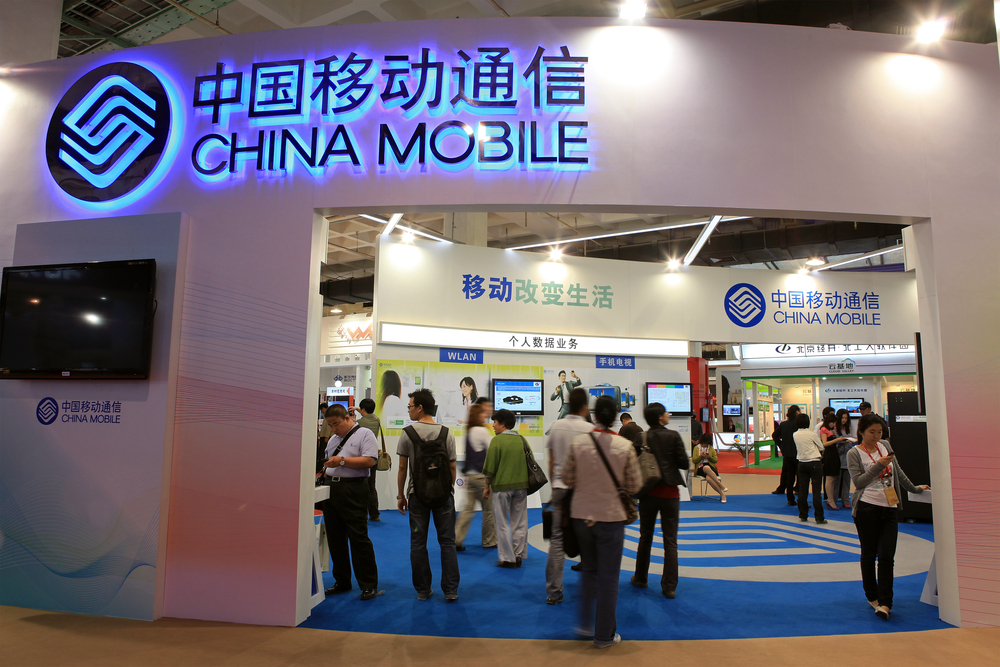
Cloud computing is one of the key strategies of China Mobile. Based on its definition of cloud computing systems, China Mobile mainly uses private cloud to provide cloud-based infrastructure services for its internal IT systems, including business platforms, IT support systems, and other internal systems. China Mobile's existing five private cloud resource pools can hardly meet its increasing demand for resources, making it a pressing need to build a larger resource pool.
China Mobile has followed the principle of "planning and building private cloud resource pools slightly ahead of the times". The company places higher requirements on the most recent project: The scale and efficiency of the resource pool must be balanced to meet the requirements of multiple complex services while increasing data center equipment utilization. Services must be deployed across points of delivery (PODs) to enable multi-vendor service interconnection. O&M costs of data centers must be reduced through virtualized management of services and networks.
Huawei CloudFabric solution aligns seamlessly with China Mobile's innovative POD and multi-tier Spine-Leaf network architecture. By introducing distributed gateways, SDN DCI, and other key technologies, resource network deployment can be automated to provide high-reliability and high-performance forwarding services for various businesses. By introducing a three-segmented Virtual Extensible LAN (VXLAN) design and deep integration of controller northbound APIs with the cloud management platform, it is possible to provide a standard interface for multiple POD services and coordinate service deployment. Depending on the security level requirements of various services, the solution supports flexible definitions for whether cross-VPC data flows can pass through firewalls. It also provides SDN network O&M tools for topology management, rapid fault locating, and statistical analysis. These tools enable visualization of topology management between application, logical, and physical networks, connectivity testing and fault locating at the VXLAN level, as well as bandwidth customization and VXLAN traffic analysis in an OpenStack environment.
Huawei's CloudFabric solution has been deployed at more than 1,200 data centers in over 120 countries until now. By building agile, open, and secure cloud data centers for customers, Huawei is committed to helping operators and enterprises gain a competitive edge in the cloud service market.