Digital Newsletter
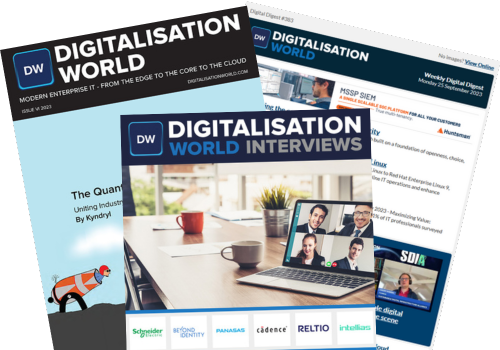
Each week our editor Phil Alsop rounds up the most popular articles, videos and expert opinions. We compile this into a Digital Newsletter and send it straight to your inbox every week.
Digital Magazines
We'll let you know each time a new edition of Digitalisation World is released so that you're always kept up-to-date with the latest and greatest news and press releases.
Video Magazines
The Digitalisation World Video magazine contains the latest Zoom interviews with experts in the industry.
An in depth analysis of delivery download trends on Google Play Store by app marketing company App Radar has revealed the scale of the shift to takeaway, grocery and meal kit delivery apps during the Pandemic. App Radar recorded an estimated 550,826,378 new downloads globally for food and drink apps between the beginning of March 2020 and the beginning of April 2021, a 33% year on year increase.
The total number of consumers now using delivery apps, food and other products is undoubtedly much higher when iOS and web users are accounted for.
In the UK, traditional grocery chains such as Tesco (1.2m), Sainsburys (497k), Morrisons (765k) and ASDA (964k) added significant numbers of users, as customers switched to online shopping. Fast food and takeaway companies such as McDonalds (1.7 mill) grew their UK users rapidly with Burger King (263,000) also performing well. In Germany, supermarket chain Edeka’s Bringmeister delivery app added 29K users from March 2020 - March 2021, an almost 30% increase.
The nascent speedy grocery delivery sector has also seen a rapid increase in recent months. German startup Gorilla’s has secured 112K global downloads since launch, while Flink (37K), Fancy (12.5K) and Zapp (11K) have also added users quickly in their markets. UK-based Beelivery which has been in the market since 2015 saw almost 110K downloads from March 2020 to March 2021 (64% of its total user base).
Meal kit companies HelloFresh (2 million global users) and UK rival Gousto (134K) also experienced huge growth, for Gousto that was a nearly 100% uplift on users since the Pandemic. Some of the largest increases have been for ethical food delivery companies. Too Good to Go surged by 7.8 million new users and Olio by 1.4 million.
Thomas Kriebernegg, CEO and co-founder of App Radar, said: “When you look at the download numbers on a global scale it really is quite staggering. Nearly every country has simultaneously seen a seismic shift in how food and groceries are chosen, ordered and delivered.
“As you would expect the likes of UberEats, Doordash and Deliveroo all performed well due to restaurants closing. However, what is more interesting is the balkanisation of the grocery delivery sector as well as the emergence of ethical food companies as an alternative to the big players.
“Within the grocery market there’s a mix of established brands both growing their already significant online delivery base, launching their own ‘fast delivery’ services, and brand new startups seeking to compete on a local basis. How these different segments perform as we return to pre-2020 conditions will give us a good indication of whether consumer behaviour has changed permanently - which could spell the end for large bricks and mortar supermarkets - or if it’s a flash in the pan.”