Digital Newsletter
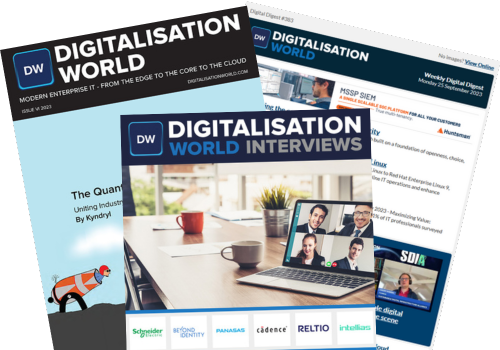
Each week our editor Phil Alsop rounds up the most popular articles, videos and expert opinions. We compile this into a Digital Newsletter and send it straight to your inbox every week.
Digital Magazines
We'll let you know each time a new edition of Digitalisation World is released so that you're always kept up-to-date with the latest and greatest news and press releases.
Video Magazines
The Digitalisation World Video magazine contains the latest Zoom interviews with experts in the industry.
Gartner forecasts that by 2028, a significant portion of organisations will adopt a zero-trust approach to data governance. This shift arises from the increasing presence of AI-generated data, which complicates verification processes.
"Organisations can no longer implicitly trust data or assume it was human generated," stated Wan Fui Chan, Managing VP at Gartner. As AI-generated content becomes more prevalent and indistinguishable from human-created data, implementing authentication and verification measures is crucial to protecting business and financial outcomes.
Large language models (LLMs), often trained on diverse sources including books and research papers, are at risk of repetitive AI content. Gartner's 2026 CIO and Technology Executive Survey found that 84% of respondents plan to boost GenAI funding.
This surge in both AI adoption and investment will lead to models being trained more on former AI outputs. The consequence could be model collapse where AI results might fail to mirror reality.
"As AI-generated content becomes more prevalent, regulatory requirements for verifying ‘AI-free’ data are expected to intensify in certain regions,” cited Chan, emphasising the variances in global regulatory standards. Identifying and tagging AI-generated data will be critical.
Success in this regulatory landscape depends on tool availability and workforce expertise in information management and metadata solutions. This will support data cataloguing, differentiating proactive organisations.
Proactive management practices, like active metadata management, provide advantages. Such practices allow organisations to swiftly analyse and automate decisions across their datasets.
Such actions will be a significant in combatting the risks of unchecked AI-generated data, preserving organisational integrity in a rapidly evolving digital landscape.